


In January 2026, the United Russia party announced plans to establish a party-controlled “network of professional international observers,” dismissing established, international election monitoring organizations such as OSCE/ODIHR as “provocative” and replacing them with bilateral party-to-party arrangements. According to Andrey Klimov, a member of United Russia’s supreme council bureau, one such deal is already being finalized with the Serbian People’s Party. More are expected in the run-up to the 2026 Duma “elections”.
This move does not promote electoral oversight. It replaces it. A party-run, loyalty-based network cannot meet the baseline conditions for independent election observation as defined in the Declaration of Principles for International Election Observation: Independence from political actors, a published methodology, proportional scope, and transparent funding and outputs. United Russia’s proposal is designed for pre-packaged endorsements. Calling that “observation” is a category error by design.
EPDE’s investigative work into “fake observation” since 2017 documents how political principals in non-democratic regimes create the appearance of external validation. They invite handpicked foreign guests, who issue high praise after brief, non-representative visits. With credible international monitoring blocked for political or ideological reasons, and independent domestic election observation organizations criminalized, exiled or jailed, such ad-hoc statements become a substitute for evidence.
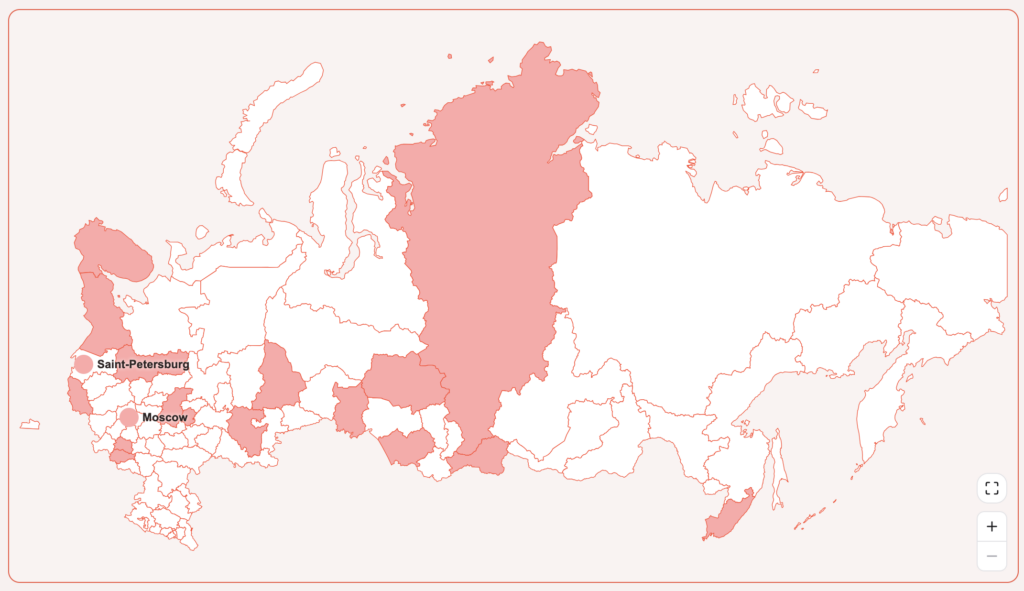
The proposal to build a party-controlled network also resembles the Kremlin’s recent turn to institutional co-optation. EPDE’s 2024 “Single Voting Day” analysis documents how Russia’s Central Election Commission invited senior officials from foreign election commissions, particularly from the Global South, including Africa, to Moscow and St. Petersburg to produce on-camera validation of a non-competitive process. The strategy exploits institutional authority: a visiting foreigner’s name and title become an asset for broadcasting and are recycled domestically as proof of “transparency.” It is not observation. It is the instrumentalization of public institutions for messaging.
By promoting United Russia’s party observation, the Kremlin tries to dismiss the credible and methodologically strongest election observation as developed by OSCE/ODIHR and to replace it with an alternative system of election justification.
EPDE’s position is clear. Election observation is a public good defined by independence, method, proportional scope, and transparent outputs. Party-run networks, concluded through bilateral political deals and aimed explicitly at replacing professional institutions, are influence operations; they are not observation.
EPDE calls on political parties globally, to practice caution when approached by United Russia for building up election observation structures. Acting on such invitations comes with damaging the reputation of both the party and institutions they represent and calls into question whether these parties themselves believe and stand up for democratic rights of their constituents.
EPDE calls on international media and press representatives covering the 2026 Duma „elections“ to be aware of the absence of political competition, the absence of free political expression, lack of press freedom, and the ongoing prosecution of those promoting election integrity and independent election monitoring. For further analysis of these tactics and our recommended safeguards, see EPDE’s reports. We’ve covered Russia’s institutional co-optation of foreign EMBs, Belarus’ mass deployment of politically biased invitees, Azerbaijan’s international amplification model, and our Georgia briefs on how ad-hoc delegations simulate credibility. Taken together, these reports describe the ecosystem that the United Russia party intends to institutionalize with a permanent, party-run operation. There are no shortcuts to credible observation. Credible observation has one path: standards. Anything else is a substitute.
Subscribe to our
newsletter
Sign up for our monthly newsletter
and receive the latest EPDE news
Subscribe to our
newsletter
Sign up for our monthly newsletter and receive the latest EPDE news
