
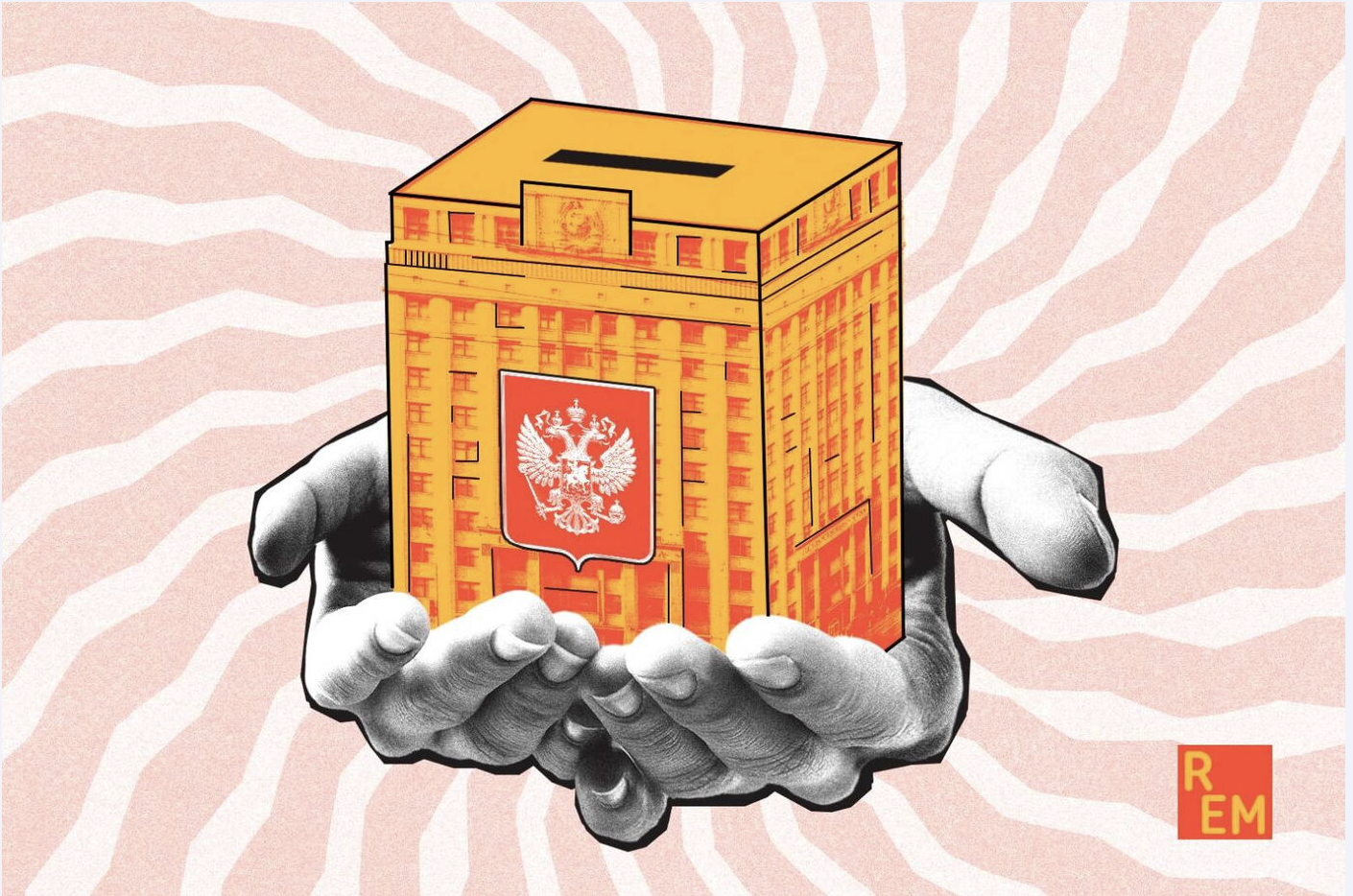
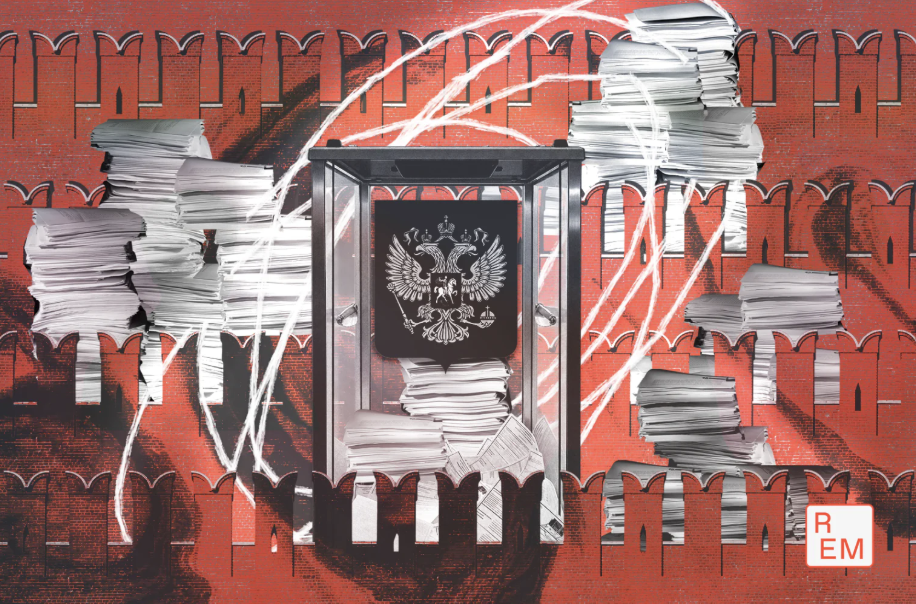
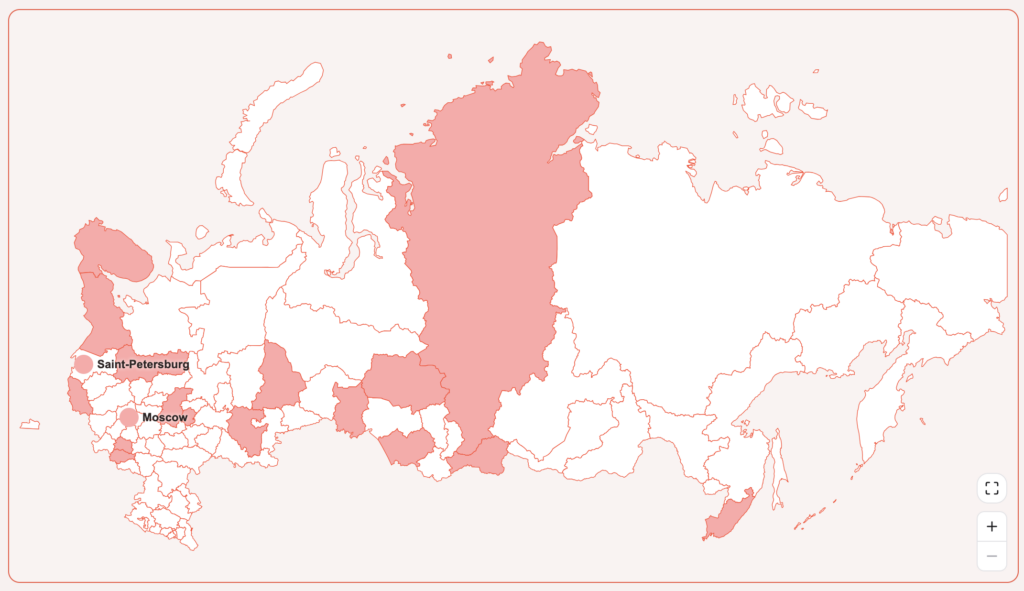
In 2026, Russia will hold its second most significant electoral event after the presidential vote — elections to the State Duma. At the same time, voters will also elect regional governors (in at least seven regions, including Chechnya), regional legislative assemblies (in 39 regions, including St. Petersburg, the Moscow and Leningrad regions), and city councils in regional capitals (10 cities, including million-plus cities such as Perm and Ufa, as well as Kaliningrad).
Preparations for the elections are already underway. The Kremlin is tightening electoral legislation and intensifying repression against the opposition. This allows experts to argue that elections in Russia remain important both for the authorities and for the opposition. For the Kremlin, elections serve as a tool of political legitimization; for the opposition, they remain one of the few opportunities to demonstrate that a significant part of Russian society is dissatisfied with the regime’s internal and foreign policies.
The media project SOTAvision discussed the upcoming elections with Russian electoral expert Stanislav Andreychuk, former co-chair of the movement in defense of voters’ rights Golos. REM publishes a translated summary of the key points from the interview.
The space for competitive elections and genuinely competitive public politics in Russia continues to shrink. This does not mean, however, that elections have disappeared altogether. Competitive races may still emerge in certain regions or at certain levels of government. The lower the level, the greater the chances of a genuinely competitive campaign. Russia is a vast country, and it is extremely difficult for the Kremlin to exert full control at the grassroots level. It is only in such local races, where real alternatives exist, that it is still possible to observe genuine public sentiment. At the regional and federal levels, competition has largely been eliminated. Therefore, the results of these elections do not tell us much.
The issue is not only electoral fraud, although the scope of manipulation is also expanding. Another key factor is the absence of genuine alternatives: when voters are offered no real choice, they tend to vote for whoever is available. If there are four candidates and three of them run no campaign at all, while the fourth shows even minimal activity, it is hardly surprising that this candidate is likely to receive 60–70 percent of the vote. Not because the candidate is particularly strong, but because there is simply no meaningful reason to vote for anyone else.
This is what we have been observing over the past four years. Since 2022 in particular, the number of candidates in elections has been shrinking sharply — not only among registered candidates, but even among those who are nominated in the first place. Individuals refrain from running, and parties do not put forward candidate lists. As a result, United Russia has effectively established a monopoly.
In addition, wartime censorship is in effect, and even when candidates are nominated, they face severe restrictions on what they are allowed to say. Almost all substantive issues are off-limits, except for completely secondary topics. Even discussing environmental problems has become nearly impossible, let alone addressing the link between the state of the economy and the war against Ukraine, the condition of infrastructure, or the deterioration of public utilities. Thus, candidates are unable to speak about the issues that matter most to voters.
Channels of communication with voters are also restricted. Independent media are banned, and YouTube is effectively inaccessible. Public rallies are prohibited as well, because Russia still formally maintains COVID-era restrictions — though these are applied selectively. Football matches are allowed, as are stadium concerts by Shaman, but a street picket is not, since the restrictions introduced in 2020 have never been lifted.
If you produce printed campaign materials, there is a high likelihood that they will be confiscated. In the city of Lipetsk, for example, 70,000 copies of a newspaper produced by the Communist Party were seized as allegedly illegal campaigning. Then it turned out that the campaigning was lawful, and the newspaper was returned only recently, but by then the campaign was already over.
As a result, the outcomes of Russian elections reflect very little — not only because of electoral fraud, but because, in practice, there is no real campaign at all.
According to Andreychuk, the participation of war veterans in elections is purely a public relations exercise. The number of people with actual combat experience among candidates is negligible. Available data suggest they account for no more than 2% of all candidates nominated at all levels of elections. At the grassroots level, they are virtually absent. To put this in perspective, their number is roughly half the number of candidates who have previously had a criminal conviction.
Not all of them were elected — but who, then, actually won? The most illustrative example is the new governor of the Tambov region, Yevgeny Pervyshov. He is, in fact, a career politician and bureaucrat. Originally from the Krasnodar region, he was first elected to the Krasnodar city council as a member of the Rodina party, then ran from Just Russia, later joined United Russia, and went on to become mayor of Krasnodar. He subsequently became a State Duma deputy and, about a year after entering parliament, reportedly went to fight in the “special military operation”, received the Order of Courage, and was then appointed governor. This is a typical case: many of those who are associated with the ongoing war actually have nothing to do with it at all.
Naturally, some were elected while still serving in the military. Many of them are career officers who have always been present on Russian ballots. A colonel becoming a deputy in a regional legislative assembly is a fairly typical story. There are many military personnel in Russia, so there has always been a certain number of their representatives in government bodies. By contrast, there are very few stories of those who came from the grassroots — so to speak, an ordinary rural man who went to fight, earned medals, and was then elected.
The apparent goal of the recent wave of mass prosecutions against politicians from the Yabloko party is to bar the party from participating in elections. One way to achieve this would be to designate the party as an extremist organization. However, Yabloko has a long history and a certain institutional status, and declaring it extremist is not entirely appropriate, even under the current circumstances. Nevertheless, this seems to be precisely the objective, or at least one of the plausible scenarios now being considered.
The issue is that Yabloko still retains parliamentary privileges — namely, the right to nominate candidates in federal elections without collecting signatures. Only 13 parties in Russia currently have this status. Yabloko still has the capacity to field a certain number of candidates and can raise at least some financial resources for an election campaign. At the federal level, Yabloko’s results in recent years have been poor. However, in regions where the party works consistently, it achieves quite respectable results — such as in the Pskov region, Novgorod, and Karelia. Its anti-war agenda could realistically attract a certain share of the vote. The Kremlin is not particularly eager for this agenda to be voiced at all. The demonstrative pressure on Yabloko appears to send a clear message: either you quiet down and withdraw from the elections voluntarily, or you will be designated an extremist organization and barred from participating altogether.
There is already a formal legal basis to remove Yabloko from the elections at any moment. Recently, party member and former Moscow City Duma deputy Maksim Kruglov was added to Russia’s list of extremists and terrorists. Under the newly adopted anti-extremism legislation, this gives the Kremlin a mechanism to designate the entire party as an extremist organization. Yabloko is well aware of this risk. It is also one of the reasons why, under the current conditions, people are reluctant to run as candidates: there is a very real prospect that doing so will trigger pressure against them.
Another example is Boris Nadezhdin, who attempted to run for president in 2024 but was denied registration. He is now facing a cascade of fines. Six years earlier, there was Pavel Grudinin, the Communist Party’s presidential candidate in 2018 — a figure who had even been approved by the Presidential Administration. Yet after the election, he was effectively crushed by the system.
We are used to speaking in terms of “systemic” and “non-systemic” opposition. But in reality, all systemic parties, parliamentary parties, have their own political prisoners. The Communist Party has Artyom Samsonov in Vladivostok. The LDPR has Alexander Gliskov in Krasnoyarsk. And for everyone else, the prospect of ending up on that list is a powerful deterrent.
In Moscow, electronic voting — conducted via special terminals at polling stations — has become virtually universal. During the presidential election in March 2024, around 1.5 million Muscovites were still able to vote using paper ballots. However, just a few months later, in September 2024, new legislation required voters to submit a prior application in order to vote on paper. Only 53,000 people did so. Moscow alone accounts for about 7 million voters out of the officially reported 110 million nationwide — roughly 5% of the entire electorate. All of them are now required to vote exclusively electronically, while remote online voting (REV) in Moscow remains entirely beyond public oversight.
In the regions, the situation is somewhat different. It is important to understand that REV has still not been introduced everywhere. However, where it does exist, the system is completely beyond oversight. Unlike in Moscow, though, the e-voting is not yet total. In regions where REV has been implemented, roughly 15–20% of registered voters cast their ballots online. Given the generally low turnout, this becomes a significant share of the vote, since relatively few people show up at traditional polling stations.
Some regions that used online voting in previous years abandoned it in 2025. In other words, there is no clear, linear trend toward the expansion of REV. This may be because in some regions local authorities have still not learned how to work with REV effectively. The main problem with REV is not falsification, as in Moscow, but coercion. If we look at REV statistics, we see that around 50% of registered online voters cast their ballots within the first four hours after online voting opens. The biggest spike occurs on Friday at 9:00 a.m. — when people arrive at work and vote under the supervision of their management. This is a crucial factor. Previously, public-sector employees could be forced to go to a polling station, but once inside the voting booth, they could mark any box they wanted. When voting takes place at work, on a work computer, with a supervisor standing behind you, voting behavior changes. As a result, REV unfortunately greatly facilitates coercion and undermines free expression of will.
In the run-up to the 2026 elections, the authorities will seek to expand the use of REV and extend it further across the country. Regions that abandoned REV this year will likely be pressured into adopting it after all. Even so, REV will not cover the entire country, and even where it is used, not all voters will cast their ballots online. Therefore, while REV does have a significant impact on election outcomes, what matters even more is how people vote using paper ballots — and how securely those ballots are stored overnight during multi-day voting. According to Andreychuk, three-day voting causes greater damage to electoral transparency than REV, at least at the scale at which REV is currently being used.
Stay Informed:
Subscribe to the REM newsletter “Russian Election Update” to receive regular analysis of electoral trends and political developments in Russia.
Subscribe to our
newsletter
Sign up for our monthly newsletter
and receive the latest EPDE news
Subscribe to our
newsletter
Sign up for our monthly newsletter and receive the latest EPDE news
