
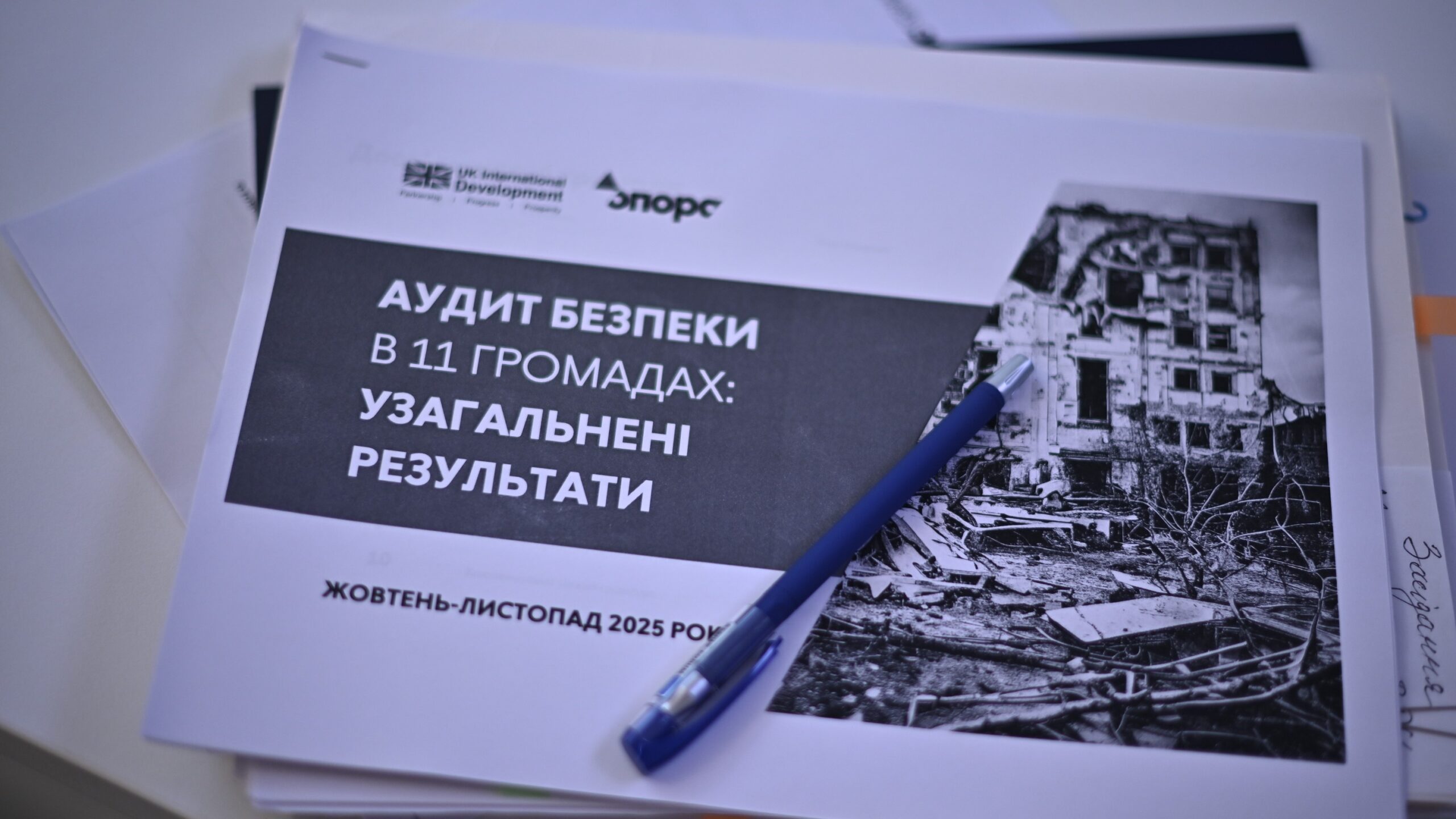



Civil Network OPORA presented the results of monitoring 11 hromadas regarding the possibility of holding elections there. The results were made public during a roundtable discussion titled “Assessing the Security Situation in Hromadas: The First Step Toward Safe Postwar Elections” on December 12.
For this study, both large and small hromadas with different levels of challenges were selected, including de-occupied hromadas, those located in combat zones, border areas, and rear (non-frontline) areas. The hromadas are located in the following regions: Zaporizhzhia, Dnipropetrovsk, Donetsk, Kherson, Chernihiv, Sumy, Kharkiv, Mykolaiv, Odesa, Poltava, and Zhytomyr.
The security audit is a universal tool for assessing the organizational capacity of hromadas. It allows for a transparent and objective determination of the possibility of restoring democratic processes in the postwar period, including establishing whether conditions exist for holding elections. The assessment is conducted using 35 indicators across four blocks: basic preconditions, physical security, socio-economic factors, and the state of democratic processes.
Currently, legislation prohibits holding elections and referendums. However, if the legal regime of martial law were to be lifted, 3 out of the 11 hromadas would pass the physical security assessment with positive results. The key problems in the area of physical security are shelling of hromadas, a lack of shelters near the premises of polling station election commissions (PECs), and an underdeveloped emergency alert system.
Under the “Socio-Economic Development” block, the Olevsk, Pivdennivsk, Pervomaisk, and Novomykolaivka hromadas passed the audit. The key challenges for the functioning of hromadas are ensuring electricity supply and the operation of schools. The energy supply situation deteriorated significantly in October–November 2025 as a result of Russian attacks. A barrier to resuming in-person education is the lack of shelters in schools.
According to the “Democratic Processes” indicators, the Kremenchuk and Pivdennivsk hromadas received positive assessments. The main obstacles were the ban on peaceful assemblies (5 hromadas), destruction of electoral infrastructure (4 hromadas), and limited capacity to recruit members of PECs (5 hromadas).
Hromadas located in combat zones and along the border with Russia (Nikopol, Snovsk, Kramatorsk, Velyka Pysarivka, Novomykolaivka, Kherson) or those de-occupied in 2022 (Izium, Pervomaisk) show the worst results across all thematic sections of the audit. Overall, the best results were demonstrated by rear-area hromadas: Olevsk, Pivdennivsk, and Kremenchuk.
Subscribe to our
newsletter
Sign up for our monthly newsletter
and receive the latest EPDE news
Subscribe to our
newsletter
Sign up for our monthly newsletter and receive the latest EPDE news