
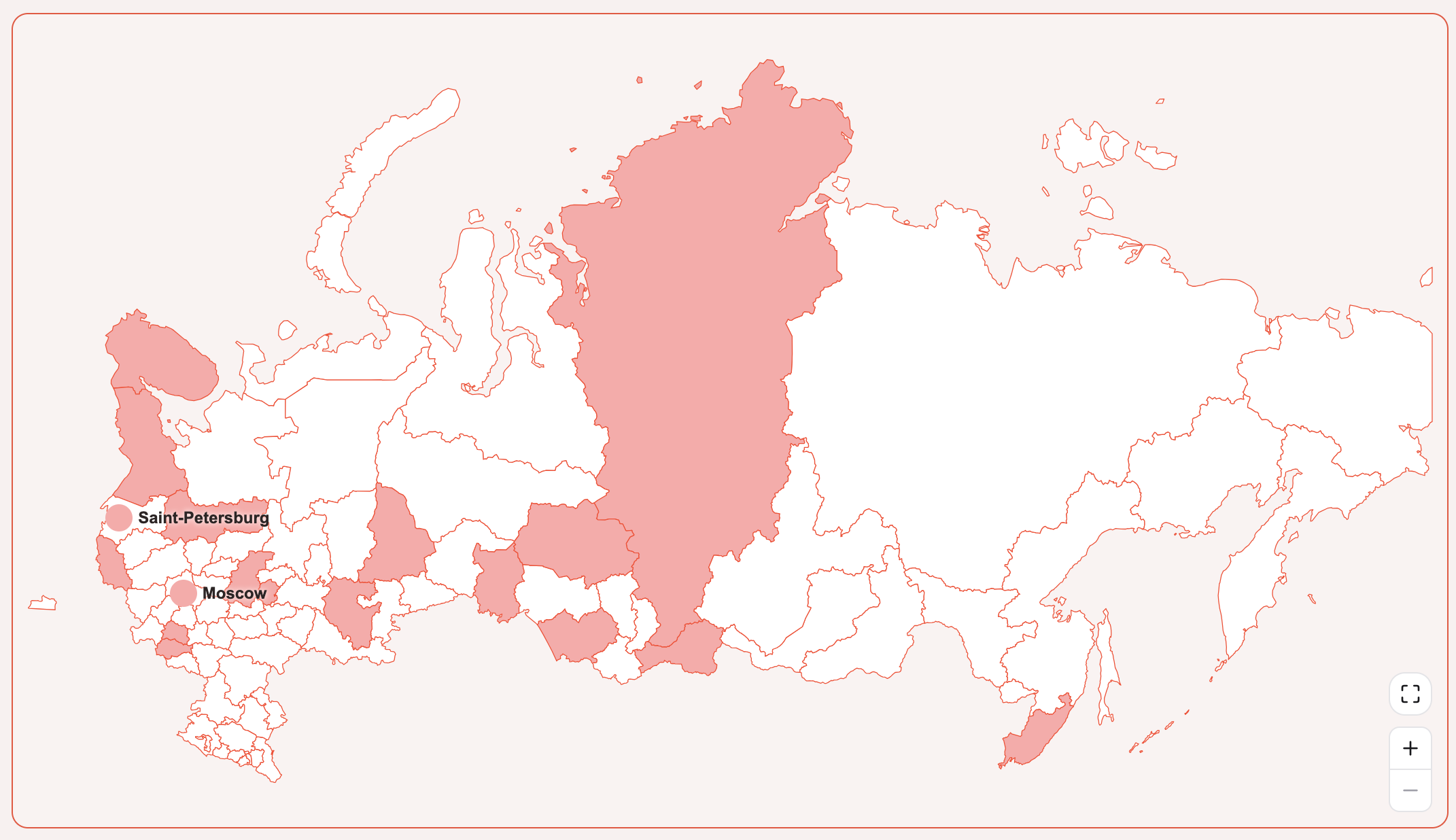
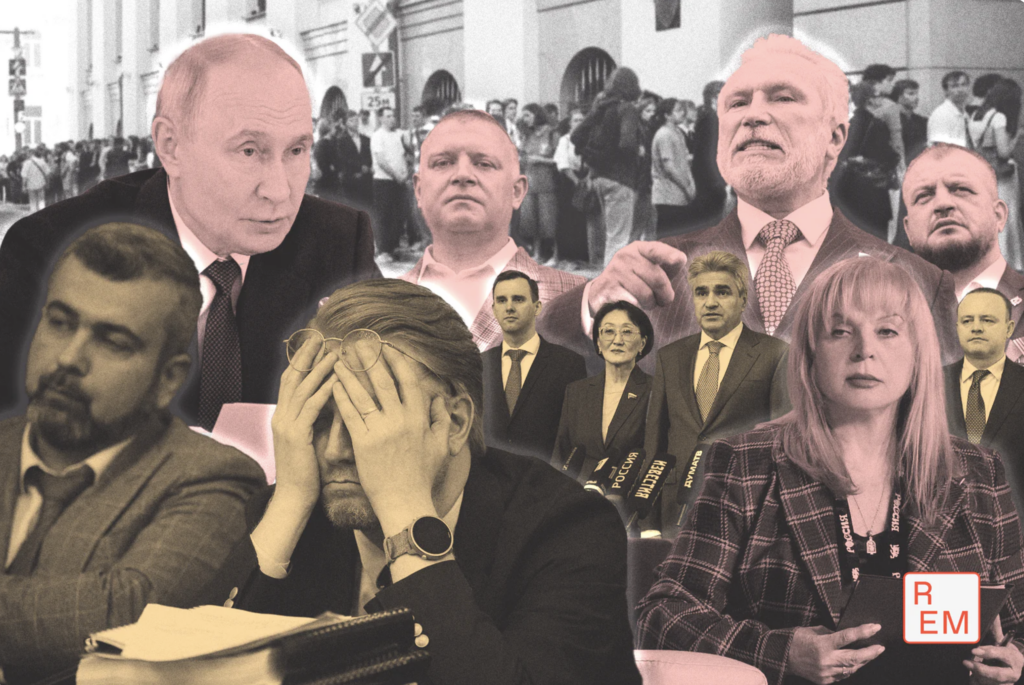
Over the past few months, the Russian Election Monitor (REM), a strategic partner of the EPDE, has published regional profiles offering a comprehensive overview of the political landscape in Russia’s regions, including political history, local self-government, and up-to-date electoral data.
The mapping is currently under development, with profiles published as they become available. So, far the following profiles have been added:
The Komi Republic is one of the largest regions in Northwestern Russia. Its political life has been shaped for decades by the resource-based economy and relations with the federal center. Oil, gas, coal, and timber provide a substantial part of the region’s economic base, but key decisions about the development of these industries are largely made elsewhere. Against this backdrop, environmental conflicts and disputes over whether Moscow takes the region’s interests into account have periodically become sources of mass political mobilization.
Coverage of the North Caucasus is typically dominated by security concerns, Chechnya, and the outsized figure of Ramzan Kadyrov. Yet the region is of interest for reasons that extend beyond these issues. For years, the North Caucasus has served as a kind of laboratory for political practices, many of which have subsequently spread to other parts of Russia. The 2026 electoral cycle offers another opportunity to trace this pattern.
Chuvashia, officially known as Chuvash Republic, is one of the regions that will hold both State Duma and parliamentary elections in September 2026. It is one of Russia’s ethnic republics, where the language of the titular ethnic group shares official status with Russian, and elements of national and cultural autonomy remain formally in place. For decades, this status distinguished Chuvashia from most other Russian regions. In the upcoming electoral cycle, however, it is other processes that are shaping the republic’s political life.
Kursk (in Russian: Kurskaya oblast’) is the only Russian region entering the 2026 elections after months of fighting, partial occupation, and the mass evacuation of civilians. Following Ukraine’s incursion in August 2024, the war stopped being a distant reality and became the defining event shaping the region. Fighting, mass displacement of people, and the destruction of border communities deeply transformed the security environment in the region, along with its economy, governance, information landscape, and public attitudes.
For decades, the city of Saint Petersburg has been regarded as Russia’s most liberal and politically competitive metropolis. As the country heads toward the 2026 State Duma elections, this reputation is at stake. Will St. Petersburg remain Russia’s most competitive electoral arena, or will it be even more absorbed into the power vertical?
The Murmansk region (Russian: Murmanskaya oblast’) is heading into the State Duma elections having lost one of its defining features. Alongside Saint Petersburg, the Kaliningrad region and the Republic of Karelia, it was long regarded as one of Russia’s most outward-looking regions, with deep connections to Europe. Murmansk residents regularly traveled to Norway and Finland, local authorities participated in international cooperation projects, and cross-border interactions were an established part of everyday life in the region. Russia’s full-scale invasion of Ukraine in 2022 and Europe’s response to it brought an end to this model. Finland closed its border, ties with Northern Europe were sharply curtailed, and the region found itself in an entirely new political and economic reality.
To receive updates from the Russian Election Monitor directly in your inbox, subscribe to their newsletter.
Subscribe to our
newsletter
Sign up for our monthly newsletter
and receive the latest EPDE news
Subscribe to our
newsletter
Sign up for our monthly newsletter and receive the latest EPDE news
