
High-speed changes to electoral law disregard international norms
A new draft law has been approved that provides for postal voting to be the only means for all eligible citizens to cast their vote and will replace existing electoral commissions with new ones. Experts indicate that the bill contains loopholes, inconsistencies, and legislative errors. Conducting presidential elections on its basis would not meet a […]
An early balance of emergency measures

In response to COVID-19, the Orbán-government has introduced measures that are neither temporary nor proportional. In this analysis, election expert Zsuzsanna Végh argues that the government is using the pandemic as a distraction to further introduce restrictions on democratic rights and freedoms in Hungary.
High-speed changes to electoral law disregard international norms
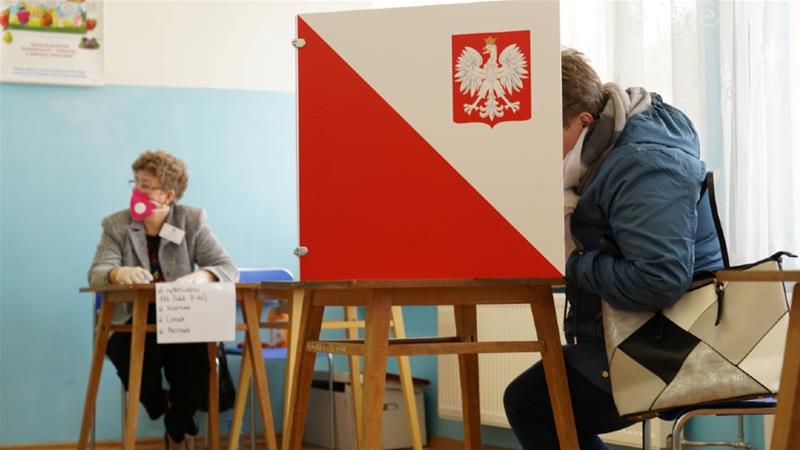
Source: Arkadiusz Stankiewicz/Agencja Gazeta/Reuters On 6 April, the Polish Sejm (lower house of the Polish parliament) approved a draft law “On special rules for the conduct of general elections for the President of the Republic of Poland scheduled in 2020”. This draft law provides for postal voting to be the only means for all elicgible […]
2020 Roadmap for electoral, referendum and political finance reforms

Executive Summary On December 19, 2019, after eight years of consultations and negotiations between political actors, civil society, and the expert community, the Verkhovna Rada of Ukraine finally adopted a new election code. The final version of the code largely reflects recommendations proposed by civil society and election experts to ensure human rights and facilitate […]
Draft law on restricting access to information is excessive and unjustified

Draft law No 3294 has been registered in the Parliament. It suggests suspending the terms for consideration of citizen requests, requests for public information, and lawyers’ enquiries for the quarantine period. Civil Network OPORA is critical about the draft law deeming such restrictions as excessive. Draft law No 3294 was submitted to the Parliament on March, 30, […]
Abuse of COVID-19 response measures against political opponents

Background: The Operative Headquarters under the Cabinet of Ministers was established on February 27 which confirmed the first case of infection in Azerbaijan a day later. Later, a lock-down regime is declared in Azerbaijan. Shops, cafes, restaurants, malls, most of the service industry is closed down, leaving the home is only allowed for a limited […]
Need to renew transparent and inclusive consultations on amendments to the Election Code

On December 19, 2019, the Verkhovna Rada of Ukraine adopted into law the Election Code of Ukraine. Its adoption and the entering into force of most of its provisions already in January 2020 marked an important step towards the harmonization of the legal framework for elections in Ukraine in line with the recommendations of international […]
Illegal political advertising on Facebook: Why is it a problem and what can we do about it

OPORA explored the pre-election campaigning on Facebook during the 2019 presidential race. It was found that parties and candidates have not declared in their official reports dozens of millions of hryvnas spent for ads in the social media. It breaks electoral standards but the law on elections does not provide any sanctions for politicians hiding their finance […]
Politically motivated arrests and persecution during the lockdown regime
The Operative Headquarters under the Cabinet of Ministers was established on February 27 which confirmed the first case of infection in Azerbaijan a day later. A lock-down regime is declared in Azerbaijan. Shops, cafes, restaurants, malls, most of the service industry is closed down, leaving the home is only allowed for a limited period with […]
Fake election observation as Russia’s tool of election interference: The Case of AFRIC
In November 2018, the European Platform for Democratic Elections published a report titled “The Globalisation of Pro-Kremlin Networks of Politically Biased Election Observation” that analysed two cases of politically biased international observation at elections in Cambodia and Zimbabwe. In the case of Zimbabwe, the report focused on the Association for Free Research and International Cooperation […]