
Electoral Reform in Ukraine #11
The Presidential elections in Ukraine are approaching fast, taking place on 31 March 2019. Issue no. 11 gives an update on recent developments regarding the Draft Election Code, which was approved by the Verkhovna Rada in the first reading in November 2017 and aims to harmonize Ukraine’s electoral legal framework by introducing a proportional electoral […]
Monitoring of the Presidential election – DECs and candidates’ programs

The Committee of Voters of Ukraine (CVU) has published its second long-term monitoring report of the Presidential election campaign. In this report CVU confirms the overall transparent establishment of district election commissions (DECs), yet also reports on problematic inclusions of candidates who are not entitled to work in the DECs and lacking experience by other […]
2nd report on the Presidential election campaign
Representatives of the Civil Network OPORA reported that the misuse of administrative resources and transparency of campaign financing became two major challenges in February during the Presidential election campaign. They further reported on the establishment of district election commissions and on instances of false accusations launched against certain candidates of being involved in vote buying […]
Presidential election campaign – misuse of administrative resources and campaign financing
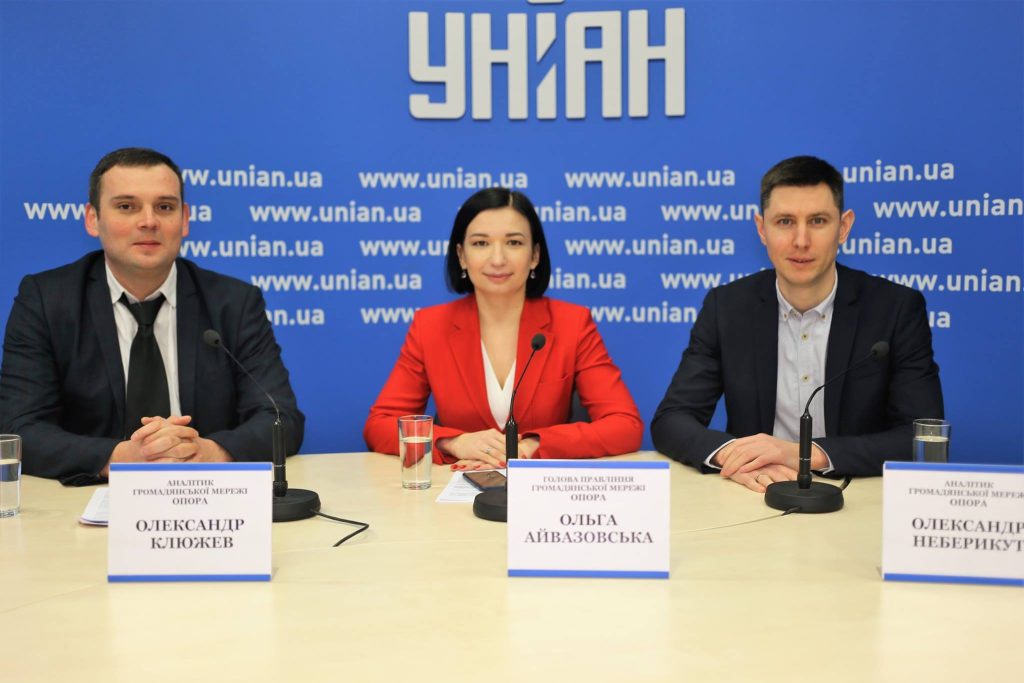
The Civil Network OPORA has published its second election observation report on the Presidential election campaign in Ukraine, which is taking place on 31 March 2019. The misuse of administrative resources and transparency of campaign financing were two major challenges in February. This is in particular a problem concerning the presidential candidate Petro Poroshenko, as […]
OPORA’s observation of the Presidential election campaign in Ukraine
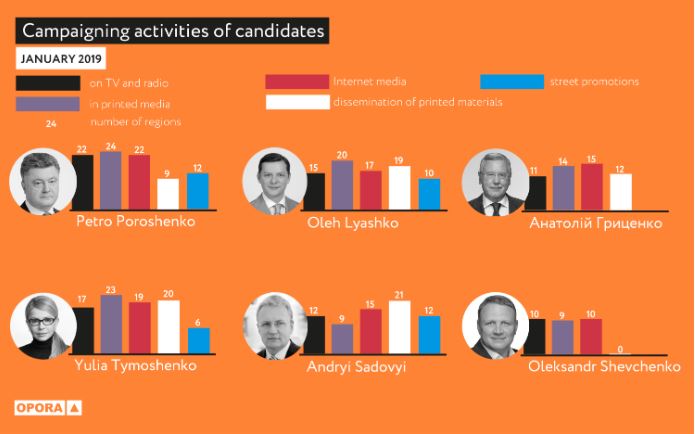
On 31 December 2018, presidential election campaign has official started in Ukraine. Registration of candidates and campaigning are main stages of the race in January 2019. Observers of Civil Network OPORA continued to analyze situation with campaign in regions, activities of the Central Election Commission, and maintained communication with law-enforcement bodies, aimed to prevent and […]
Long-term monitoring report on the Presidential election campaign
The Committee of Voters of Ukraine (CVU) published its latest findings and recommendations based on its long-term monitoring of the presidential elections occurring on the 31st of March in Ukraine. 1. According to the CVU, the current Law “On Elections of the President of Ukraine” in general allows to organize the due electoral process and to hold […]
Observation report of the presidential election campaign
OPORA has published its first observation report on the presidential election campaign where it has been recording the wide-scale early campaigning efforts organized by over ten potential candidates over the last few months. There remains some legal uncertainty about the character of such campaigning and there is also a problem of shadow campaign financing occuring […]
Long-term monitoring report on the run-up to the presidential elections
The latest long-term monitoring report on the presidential elections by the Committee of Voters of Ukraine (CVU) indicates that there remain some technical flaws with the current legislation concerning the presidential election. These include the lack of limits on the presidential candidates’ election funds and the possible appearance of a significant number of biased members […]
EPDE Policy Alert – Electoral Reform in Ukraine #10

Photo: 5 Kanal The European Platform for Democratic Elections (EPDE) monitors the progress of electoral reform in Ukraine. Issue no. 10 of the “EPDE Policy Alert – Electoral Reform in Ukraine” gives an outlook on next year’s presidential and parliamentary elections with a special focus on the lack of an effective system of legal liability […]
Electoral Reform in Ukraine #10
With 2019 just around the corner, Ukraine is preparing for two landmark elections next year – presidential and parliamentary elections. Issue no. 10 gives an outlook on next year’s presidential and parliamentary elections with a special focus on the lack of an effective system of legal liability for violations of the electoral law.
