
EPDE Policy Alert – Electoral Reform in Ukraine #13
Photo: Reuters The European Platform for Democratic Elections (EPDE) monitors the progress of electoral reform in Ukraine. Issue no. 13 of the “EPDE Policy Alert – Electoral Reform in Ukraine” informs about the recent adoption into law of the Draft Electoral Code No. 3112-1 which provides for the introduction of a proportional electoral system […]
EPDE Policy Alert – Electoral Reform in Ukraine #12

Photo: president.gov.ua The European Platform for Democratic Elections (EPDE) monitors the progress of electoral reform in Ukraine. Issue no. 12 of the “EPDE Policy Alert – Electoral Reform in Ukraine” summarizes recent developments regarding the (non)reform of Ukraine’s electoral legal framework ahead of the early parliamentary elections scheduled for July 21, 2019. On May […]
Electoral Reform in Ukraine #12
On May 22, the Ukrainian Parliament refused to vote on changes to the electoral law as they were proposed on the same day by President Zelenskiy. This issue summarizes recent developments regarding the (non)reform of Ukraine’s electoral legal framework ahead of the early parliamentary elections scheduled for July 21, 2019.
Free elections with obstacles – the 2019 Ukrainian presidential elections

By Stefanie Schiffer (European Exchange, Berlin) The 2019 Ukrainian presidential elections once again proved, for the sixth time in a row, that Ukrainian democracy is solid enough to allow a peaceful transfer of power. Outgoing President Petro Poroshenko accepted his defeat and cleared the way for his successor Volodymyr Zelensky. A look at the […]
Free elections with obstacles – the 2019 Ukrainian presidential elections
The 2019 Ukrainian presidential elections once again proved, for the sixth time in a row, that Ukrainian democracy is solid enough to allow a peaceful transfer of power. Outgoing President Petro Poroshenko accepted his defeat and cleared the way for his successor Volodymyr Zelensky. What marked the presidential elections in Ukraine in 2019? What were […]
Findings and conclusions: Presidential elections in Ukraine 2nd round

Image source: Civil Network Opora After the second round of the Presidential election in Ukraine, EPDE once again invited Ukrainian and international election experts to discuss the findings of international and citizens’ election observations and to reflect upon conclusions drawn from the two rounds of elections. Numerous speakers spoke of this election as a […]
Findings from CVU on the Second round of the Presidential elections
According to the Committee of Voters of Ukraine (CVU), voting day was generally conducted in accordance with the standards of fair and free elections. Compared to the first round of elections, the number of violations decreased somewhat. Official CVU observers recorded a number of violations of election legislation on election day, however, these violations were not […]
Statement of OPORA on the Second round of the Presidential election
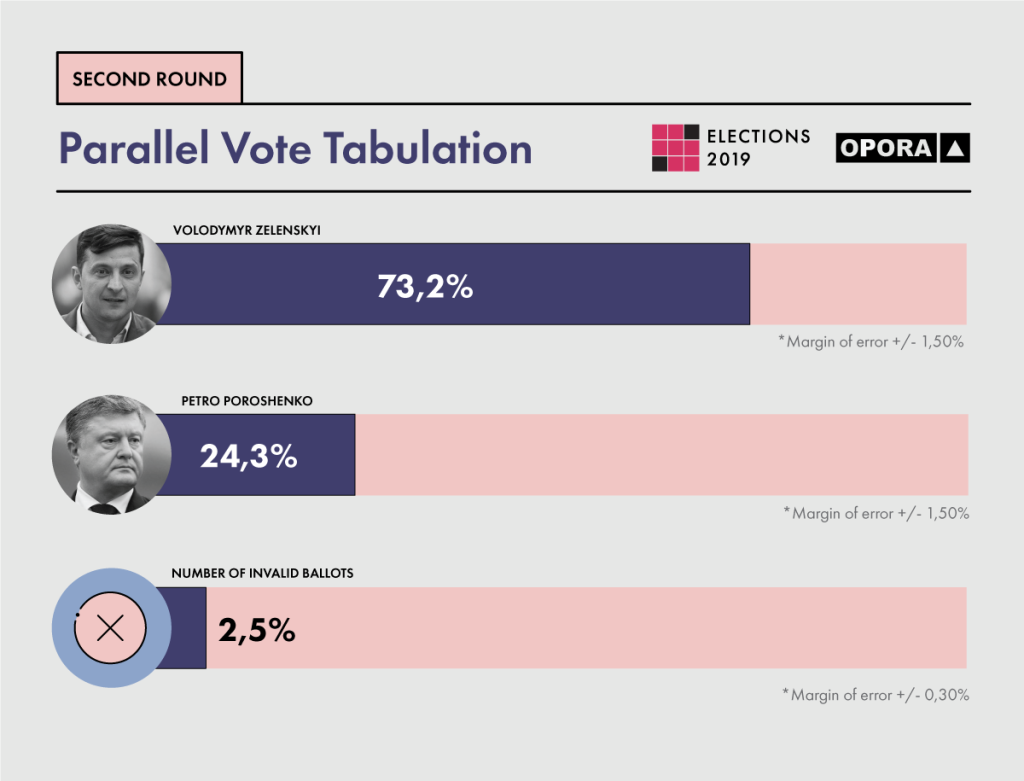
According to the provisional results of the long-term and short-term observation of the regular Presidential election in Ukraine (conducted since October, 2018), the Civil Network OPORA reports that the electoral process was of a competitive nature. The voting process and the period of pre-election campaigning mostly complied with the basic international standards of democratic […]
Findings and conclusions: Presidential elections in Ukraine 1st round
Image source: Civil Network Opora Following the first round of the Presidential election in Ukraine, EPDE organized a round table with participants of the electoral process and representatives of national and international observation missions. Aim of the meeting was to discuss observations made of the election campaign and on Election day and to reflect […]
Conclusions from E-Day by CVU

The Committee of Voters in Ukraine (CVU) found no systemic violations during E-Day. Those violations that were recorded included violations of voting procedures by the members of the precinct election commissions, inaccuracy of the voter lists, illegal campaigning, and photographing of the filled-in ballots by voters.
