

Rasto Kuzel, Executive Director of MEMO98 and EPDE board member, commented on the panel “Building a more resilient election observation ecosystem through regulatory safeguards and coordinated support” at FURIC2026, which took place on 30 September – 1 October 2026 in Brussels.
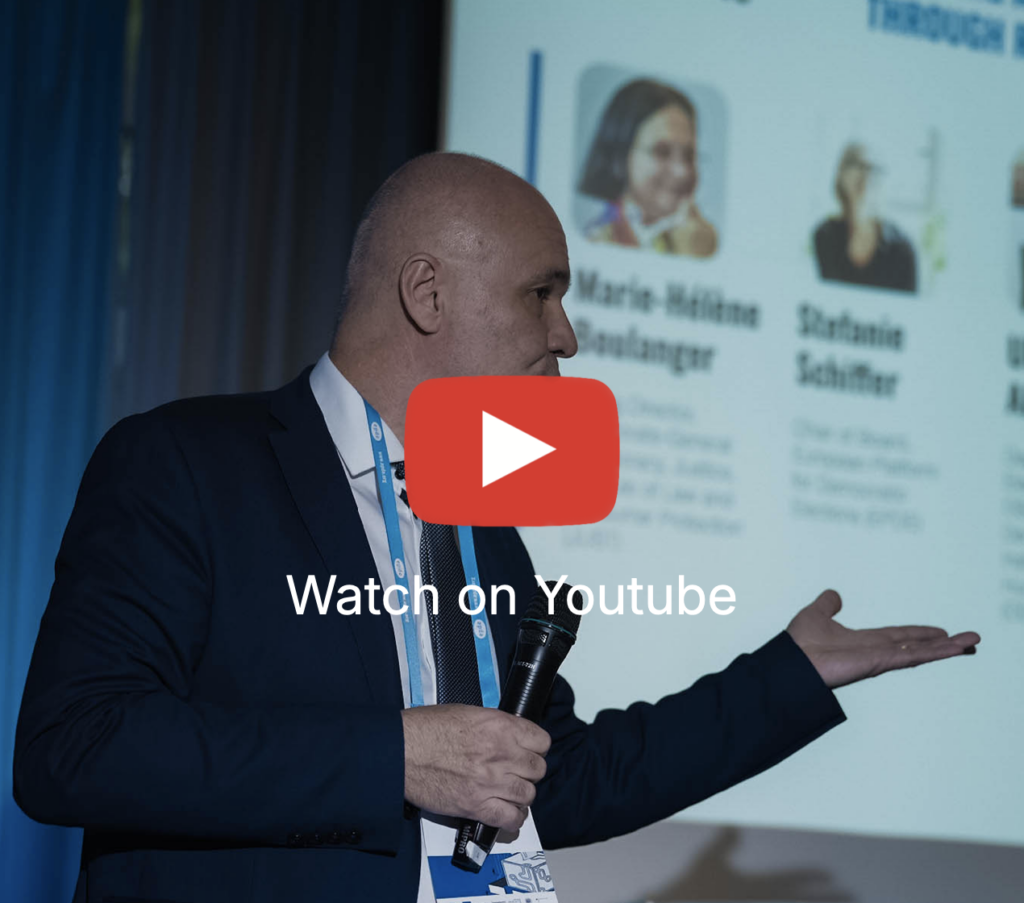
“Thank you to all panellists for a very interesting discussion. I have been a panellist, rapporteur, and moderator, but this is the first time I am a commentator.
Here are my six main takeaways from the discussion:
First, a resilient election observation ecosystem is not built only by deploying observers. It requires legal guarantees, institutional cooperation, protection from pressure, and the ability to defend credible evidence in a contested information space. Observation today is part of the democratic infrastructure that helps protect transparency, accountability, and public trust.
Second, domestic and international observers are complementary. International missions bring standards, comparative experience and visibility. Domestic observers bring context, long-term presence and follow-up capacity. But domestic observers also face longer-term risks after international missions leave. Their permanent presence allows them to monitor developments between elections and advocate reform, but it also exposes them to sustained pressure. The prosecution of our friend Anar Mammadli, who was sentenced to 13 years for doing what many of us do in this room, is clearly disproportionate and confirms how much the autocrats fear and hate election observation.
Third, protection of observers must be understood broadly. It is not only about physical safety. It is also about legal harassment, administrative pressure, financial restrictions, smear campaigns, surveillance, delayed accreditation, and arbitrary prosecution. Protecting observers therefore means protecting not only individuals, but also the organisations, data, communications, sources and operational capacity that make credible observation possible.
Fourth, fake observation must be understood as part of FIMI and hybrid threats. It is not simply a problem of a few biased individuals calling themselves observers. What we increasingly see is an attempt to create a parallel validation system for elections that do not meet democratic standards. Russia is an important example: after eliminating credible domestic observation, excluding credible international observation, and filling the empty space with “friendly” observers, it has moved towards institutionalising this model through organised structures that recruit and deploy foreign “experts”. The point is not necessarily to convince everyone that such elections are genuinely democratic. As with disinformation, the aim is often to flood the information space with conflicting assessments, blur the distinction between credible and fake observation, and make citizens unsure whom to trust.
Fifth, we have to be careful in how we respond. Fake or politically instrumentalised observation may be used to legitimise flawed elections, discredit genuine observers, and create confusion. But the response should not give governments broad powers to decide who is a legitimate observer and who is not. That could easily be misused against genuine domestic or international observers. The better response is transparency, professional standards, clear methodology, scrutiny of affiliations, and proactive public communication.
Sixth, follow-up is the real test. Recommendations only matter if they lead to reform. The problem is often not the absence of technical expertise, but the absence of political will and sustained pressure. Recommendations therefore need to be prioritised, linked to responsible institutions and timelines, and followed up between electoral cycles.
So, if I had to capture the challenge in one line, I would say: we need to move from permission to protection, and from observation as an event to observation as a democratic safeguard throughout the electoral cycle.
The next step is to translate these principles into concrete guarantees: legal recognition, timely and non-discriminatory accreditation, full access, protection from retaliation, effective remedies, structured cooperation, stronger public communication and meaningful follow-up.
And finally, protecting observers is not only about protecting observers. It is about protecting the public’s right to know whether elections are genuinely democratic – and about preventing malign actors from manufacturing false legitimacy where real democratic credibility is absent.”
