
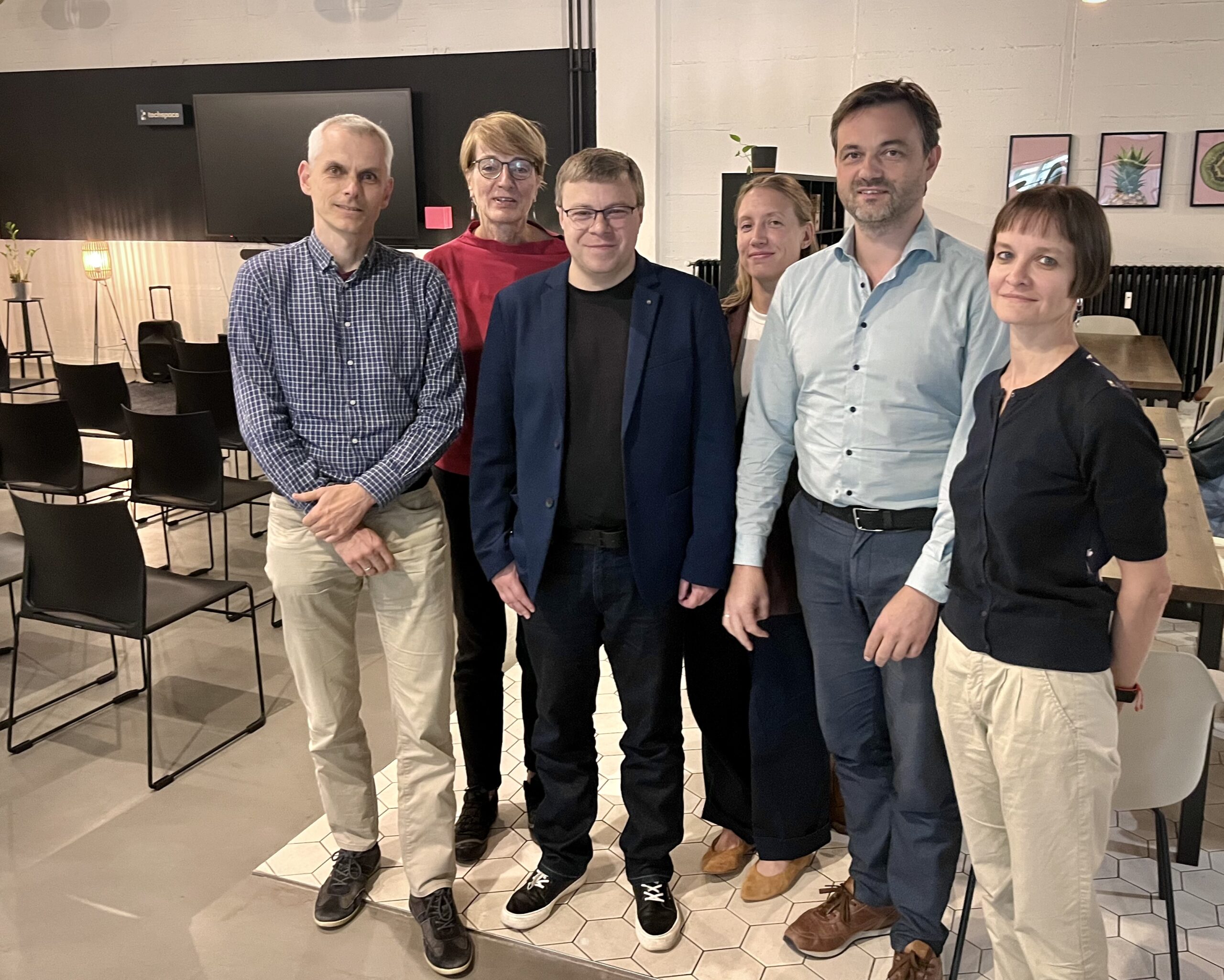


On 26 August, EPDE hosted a meeting with Uladzimir Labkovich, a Belarusian human rights lawyer, election observer, and Board member of the Human Rights Organisation Viasna who was held as a political prisoner for five years before being released on 13 December 2025 together with 122 others amongst them Ales Bialiatski, and forced to leave the country.
During the meeting, Uladzimir shared a sobering picture of repression in Belarus today: the scale of repression has largely disappeared from public view and increasingly targets Belarusian citizens abroad.
At least 890 political prisoners remain in detention
At least 890 political prisoners are currently held in Belarus, he explained, though the real number is likely 25–30% higher, since many cases never reach the human rights watch dogs/monitors. The negotiations between the United States and Belarusian authorities on prisoner releases rely on Viasna’s list that is constantly updated but bear the risk that people outside it are at risk of being forgotten in any exchange. Viasna expects another US brokered realease of prisoners in September this year of which most need to leave the country and need to be taken care of by Viasna in the Diaspora.
Transnational repression puts Belarusians abroad at risk
Labkovich cautioned that also new arrests could follow since the system needs a bargaining chip. He also warned of Belarus’s growing use of transnational repression by branding universities or other organizations as “extremist groups”, which retroactively criminalizes entire university communities like the University in exile in Vilnius and puts alumni and their families at risk of arrest and severe prison terms.
Inhuman treatment of political prisoners
Once arrested as a political prisoner, the conditions for human rights defenders and journalists are particularly harsh. Labkovich recalled prolonged isolation in cold, unfurnished cells; beatings and psychological pressure; Prisoners are forced into labor producing goods at a fraction of the wage that criminal prisoners receive. Forced labor includes production for the Russian military. Personal letters from family, friends, and colleagues can be withheld arbitrarily by the prison administration.
European bureaucratic systems not prepared for Lukashenka’s repression tactics
Released prisoners are often stripped of their documents and property, then pushed across borders, which sometimes puts them into a legal uncertainty that most of the Western migration authorities are unprepared to recognize.
EU sanctions should only be lifted on condition of the release of all political prisoners, but also that the prosecution and human rights abuse stop and the civil rights of activists are fully guaranteed.
Despite all, Labkovich ended on a note of resilience: Belarusian civil society, though most forced abroad, has grown more unified, younger, and more capable since 2020. He called on partners, including the EPDE, to continue working towards a democratic Belarus, including on elections, and to keep the repression in Belarus in the spotlight. Lukashenka must not be allowed to create a new generation of political prisoners unnoticed.
Subscribe to our
newsletter
Sign up for our monthly newsletter
and receive the latest EPDE news
Subscribe to our
newsletter
Sign up for our monthly newsletter and receive the latest EPDE news
