
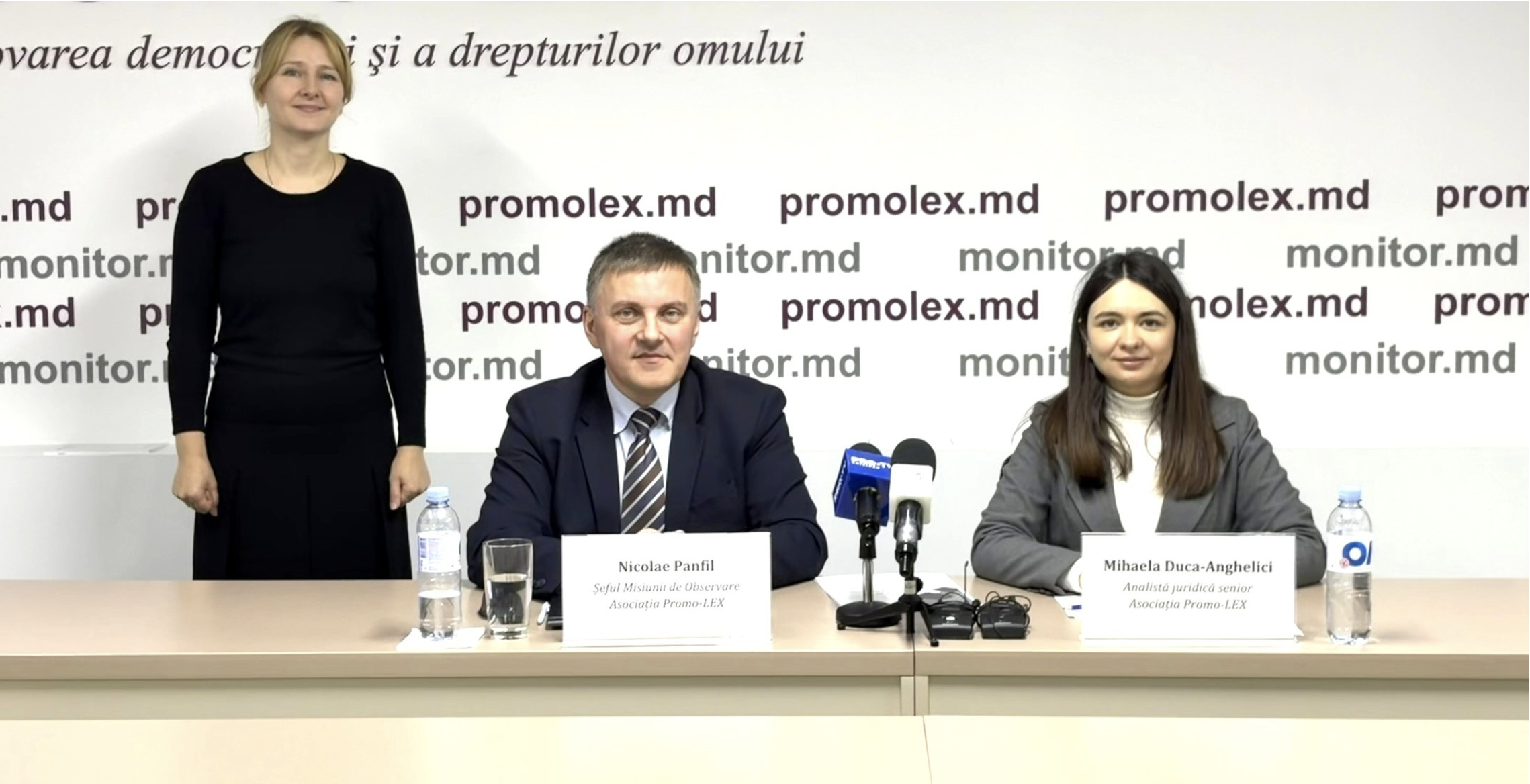
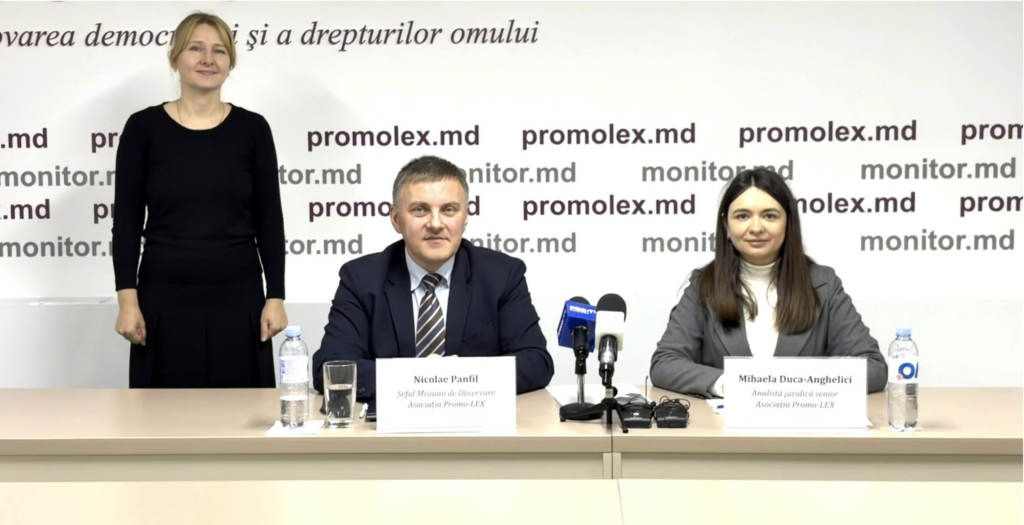
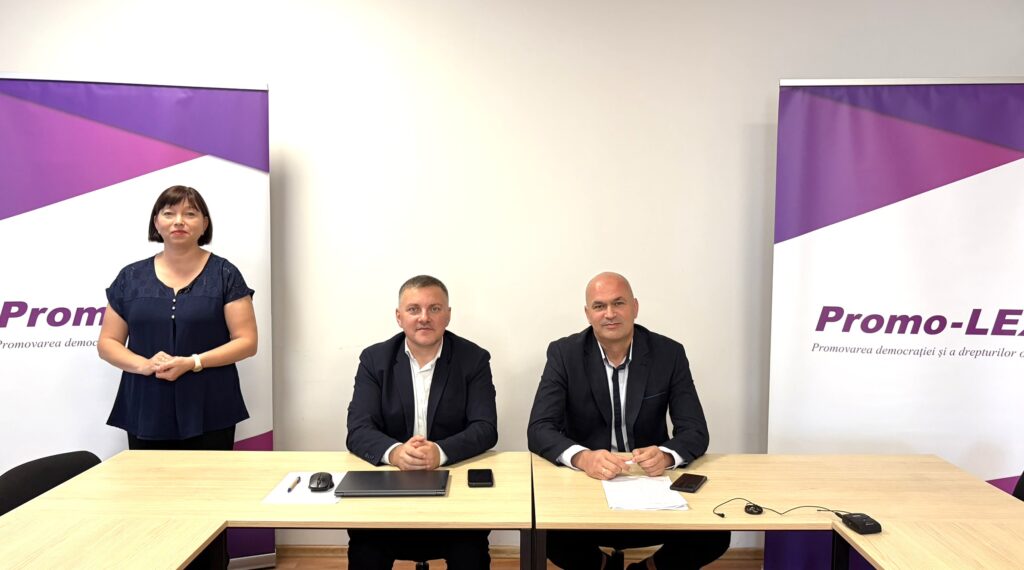
The Promo-LEX Observation Mission for the regional elections in ATU Gagauzia has launched its first report on the elections of 15 November 2026 for the Office of Governor (Bashkan) and for the People’s Assembly. The report covers the period of 3 July – 13 October 2026, preceding the start of the electoral campaign. It analyses the socio-political context of the elections, the nomination and registration of candidates, the activity of the electoral bodies, the conduct of potential competitors, election financing, the use of administrative resources, and the involvement of third parties or coordinated inauthentic behaviour.
The elections to the People’s Assembly are taking place almost a year after the expiry of its mandate, in a context marked by tensions between the central and regional authorities over the delimitation of competences. They were set after two failed attempts to organise them, amid litigation over inconsistencies between the acts of the autonomy and the national electoral legislation. Following the final conviction of Evghenia Guțul, the CEC set the date of the election for Bashkan, as the People’s Assembly had not adopted the relevant decision within the deadline. In this context, Promo-LEX recommends that Parliament clarify the moment when the Office of Bashkan becomes vacant, the manner in which the vacancy is established, as well as the solutions in case of inaction by the competent authorities.
The elections of 15 November are the first regional elections organised entirely on the basis of the national Electoral Code, with the CEC acting as the hierarchically superior electoral body responsible, together with the Central Electoral Council of Gagauzia (CECG), for their preparation. The Constitutional Court Judgment of 9 July clearly established that the rules for regional elections must derive from legislation adopted by Parliament. The legislative amendments entered into force 81 days before election day. To prevent conflicts of competence in the organisation of regional elections, Promo-LEX recommends harmonising the Law on the Special Legal Status of Gagauzia with the Electoral Code.
The electoral bodies adopted the decisions necessary for organising the elections within the legal deadlines and ensured their publication and the online broadcasting of their meetings. The CECG and the three district electoral councils were operational and provided observers with access to electoral documentation. Accessibility of premises remains a problem: of the three district electoral councils, only the one in Comrat is accessible to persons with locomotor disabilities.
Assigning the competence to accredit observers exclusively to the regional electoral body, which is established after the start of the electoral period, did not allow accredited observation of all stages. Promo-LEX therefore recommends transferring this competence to the CEC.
Of the 66 registered parties, 38 are entitled to participate in the regional elections. Six parties nominated candidates for the elections of 15 November. For the People’s Assembly, 135 candidates were registered: 92 independent candidates and 43 nominated by parties (PSRM – 23; PPG – 9; PPAM – 7; PPȚ – 2; MAN – 2). Women account for only 17% (23 candidates). Competition varies across constituencies: Comrat No. 2 and Chirsova each have seven candidates, while only one candidate is registered in Chioselia Rusă. For the elections of 15 November, the 35 single-member constituencies are maintained on a transitional basis, while the proportional system will apply from the next election. Parties therefore need to strengthen their presence and territorial structures in the autonomy ahead of future elections.
Most independent candidates collected sufficient signatures. Three refusals of registration were adopted, two related to political affiliation and one to an insufficient number of valid signatures. Eight candidates were registered for the Office of Bashkan, five of them independent and three nominated by parties (PSRM, PPG, NOI). Three persons are running simultaneously for Bashkan and for member of the People’s Assembly. The election of the same person to both offices may require holding a new election.
During the monitored period, at least four notifications and complaints were identified concerning electoral campaigning, administrative resources, domicile and the registration of candidates. The electoral bodies rejected complaints, declared certain requests inadmissible or examined them as notifications, without confirming the alleged violations. Promo-LEX stresses the need for Parliament to standardise the requirements regarding the domicile and residence of candidates for member of the People’s Assembly, in order to clarify situations in which these are located in different constituencies.
Observers documented 293 activities (260 for the People’s Assembly and 33 for Bashkan), focused on collecting signatures and online promotion, as well as participation in public events. The report documents 14 cases that could potentially qualify as use of administrative resources, including claiming credit for public investments, using institutional channels for promotion and involving civil servants and local elected officials in activities with electoral overtones. Examples include the redistribution of MDL 1.53 million between constituencies during the electoral period and the promotion of the candidacy of mayor Oleg Garizan on the page of the Copceac Mayor’s Office.
The monitoring identified the promotion of candidates through influencers, anonymous pages and sponsored ads. The page “Omega Jurnal” ran at least 24 Russian-language ads in favour of Fiodor Gagauz, while the page “pravda.md” and the accounts of TV presenter Nina Dimoglo consistently promoted his candidacy. According to Meta data, the administrators of “Omega Jurnal” are reportedly located in Indonesia and Ukraine.
Coordinated inauthentic behaviour manifested itself through the artificial amplification of messages about the alleged “liquidation of the autonomy”, the suppression of the Russian language and cultural identity, the illegitimacy of the elections and alleged EU interference. Coordinated actions were observed in favour of Ivanna Koksal, as well as materials published by accounts without declared authors to the detriment of Alexandr Stoianoglo. Other messages portrayed the rules on camouflaged candidates and the knowledge of the Romanian language as instruments of political exclusion. The narrative about the alleged “liquidation of the autonomy” was promoted by at least 70 accounts, generating 7,444 reactions, 3,154 comments and 1,428 shares. Accordingly, the recommendation to the electoral authorities is to monitor the online and offline space in order to identify the involvement of third parties or coordinated inauthentic behaviour and their impact on the electoral process.
The approved budget for organising the elections is MDL 13.6 million, most of it allocated to the remuneration of electoral staff and allowances. The CEC set the financial ceilings and the amount of interest-free credits within the deadline.
By 13 October, 14 of the 92 independent candidates for the People’s Assembly had reported opening an “Electoral Fund” account, but no competitor had declared any expenditure. The Mission estimated expenditure of at least MDL 21,568 for Bashkan and MDL 13,128 for the People’s Assembly during the nomination and registration stage, totalling MDL 34,696. Separately, MDL 18,282 was estimated for the period preceding nomination, entirely related to the promotion of Fiodor Gagauz. Thus, estimated expenditure totals at least MDL 52,978. The estimates include advertising, spots, transport, events and the value of volunteer work, which is a legal source but must be declared. Minimum rates are used, applied uniformly, and the calculations cover only the activities observed.
The full report is available here (English, Romanian, Russian).
This press release was produced within the framework of the Observation Mission for the regional elections of 15 November 2026 in the Autonomous Territorial Unit of Gagauzia (ATU Gagauzia), carried out by the Promo-LEX Association and financially supported by Sweden.
Subscribe to our
newsletter
Sign up for our monthly newsletter
and receive the latest EPDE news
Subscribe to our
newsletter
Sign up for our monthly newsletter and receive the latest EPDE news
